
What the U.S. POINTER Study Tells Us About Brain Health
One of the questions I hear most often as a Certified Dementia Practitioner is, “Is there anything we can do to reduce the risk of dementia?” Until recently, my answer was based largely on years of observational research and clinical experience. Now, one of
the largest U.S. studies ever conducted on brain health gives us an encouraging answer: yes, healthy lifestyle habits really can make a difference.
At Arista Home Care Solutions, we remind families that while there is no guaranteed way to prevent Alzheimer’s disease, there are many ways to support brain health. Staying active, eating well, remaining socially connected, and managing chronic health conditions are habits that benefit not only the brain, but the whole person. The U.S. POINTER (Protect Brain Health Through Lifestyle Intervention to Reduce Risk) study gives us even more reason to encourage those healthy choices every day.
More than 2,100 adults between the ages of 60 and 79 who were at increased risk for memory decline participated in the study. Some received ongoing coaching, exercise classes, nutrition guidance, and regular support, while others were given information to
make healthy changes on their own.
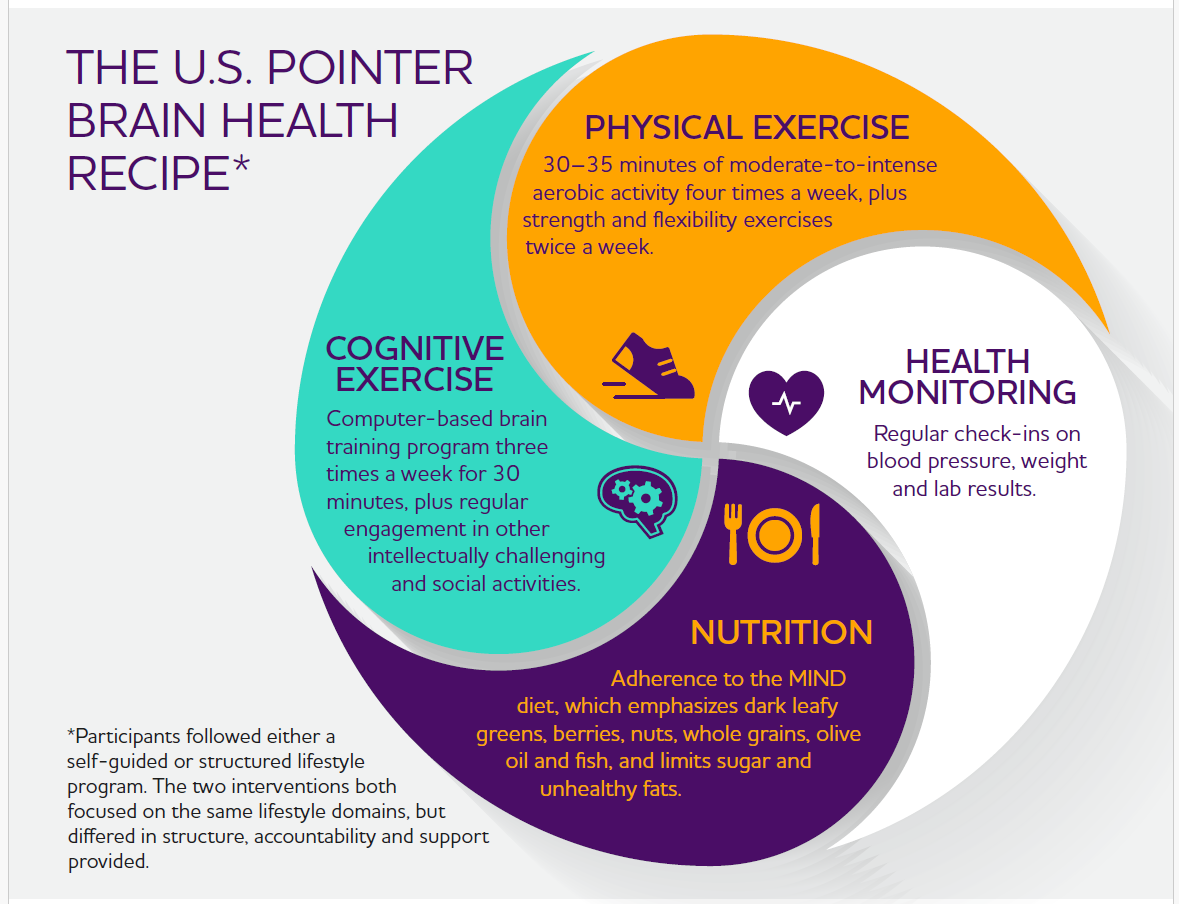
The study confirmed what many dementia specialists have long believed: that no single habit made the difference on its own. Instead, combining several healthy lifestyle choices produced the greatest benefit. Regular exercise, nutritious food, mental stimulation, social connection, and good management of chronic health conditions had a greater impact together than focusing on just one area alone. For caregivers, these findings are encouraging because many of these healthy habits—taking a walk together, preparing nutritious meals, staying socially engaged, or trying a new activity—can become meaningful parts of daily life.
The Four Habits That Support a Healthy Brain
- Move your body – Walk, exercise, stretch, or stay physically active.
- Eat for brain health – Choose more vegetables, berries, whole grains, fish, and healthy fats.
- Keep your brain busy – Learn something new, read, do puzzles, or spend time with others.
- Take care of your heart – Manage blood pressure, cholesterol, blood sugar, hearing, and other health conditions.
The good news is that there are steps we can all take to support brain health. Healthy lifestyle choices help build resilience and support long-term brain health.
Perhaps the most encouraging finding was this: Researchers estimated that participants in the structured program performed as though their brains were about one to two years “younger” than expected for normal aging.
We can’t control our age or our family history. But we can choose to take a walk, prepare a healthier meal, call a friend, learn something new, or keep our blood pressure under control. None of these habits guarantees we’ll avoid dementia, but together they give our brains their best chance to stay healthy. And after reading the U.S. POINTER study, that’s a message I find incredibly hopeful.
How Arista Can Help
Healthy habits are often easier to maintain with a little encouragement and support. Arista’s trained caregivers can help your loved one incorporate brain-healthy habits into everyday life, from taking a walk and preparing nutritious meals to staying socially
connected and engaged in meaningful activities.
If your family could use a little extra support at home, we’re here to help. Contact Arista Home Care Solutions to learn how our caregivers can support your loved one’s health, independence, and quality of life.
Paula Birney, CMA, CDP
Certified Dementia Practitioner
References:
https://www.alz.org/us-pointer/study-results
https://carney.brown.edu/research-projects/us-pointer-trial
https://pmc.ncbi.nlm.nih.gov/articles/PMC12303254/